Morality and Mortality in the Age of Death
We must change our values to postpone the Apocalypse
Climate change is trivial, inevitable, and by no means unique to the modern age. Planet Earth, the celestial rock we call home, is about 4.5 billion years old. Life, as we know it, emerged around 3.8 billion years ago. Ever since, Earth has witnessed five ‘mass extinctions‘ – cataclysmic events that rapidly eliminate at least three-quarters of all species, followed by a million-year-long recovery phase. The culprit behind each extinction was, unsurprisingly, climate change.
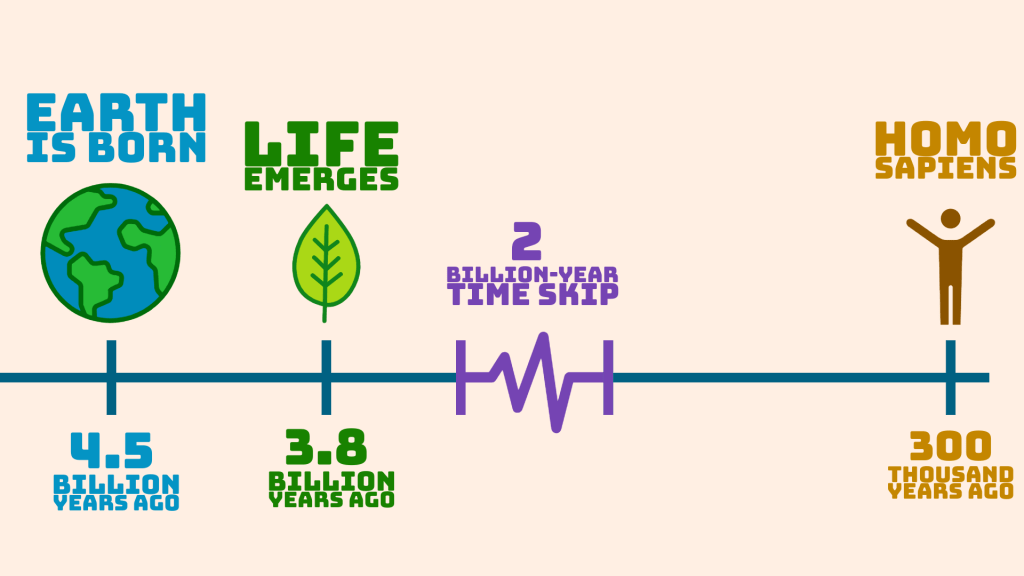
Homo sapiens, the modern human, the species we vilify for having “caused” climate change, is only 300 thousand years old. The idea of the United Kingdom has, in comparison, barely existed.
Climate change, however, is as old as Earth and part of the planetary cycle. Extinction events are tied to evolution – all life must come to an end, and death is its prerequisite.
Somehow, despite the Earth’s relentless efforts to exterminate it, life has consistently returned. Nightingales welcome spring with their beautiful song, majestic sea turtles navigate oceans, and wildebeest migrate across the Serengeti. They are symbols of life’s persistence; so are humans.
But nothing lasts forever. Our world – the human world, the world we perceive as our creation – was always doomed. Climate change and extinction were inevitable even before the industrial, carbon-emitting explosion in the 1800s. Why then do scientists, activists, and political leaders continue to emphasise the importance of combatting a naturally occurring phenomenon? Why must we reduce our carbon footprint if a fiery death is fated?
Because humanity lit this particular fire, and it is our moral duty to fight it.
Examining the evidence
The Intergovernmental Panel on Climate Change (IPCC) has established that human activity is both flint and steel of the current ecological crisis, actively fuelling the sixth mass extinction. While the previous five extinctions resulted from tectonic calamities, volcanic eruptions, and one gargantuan asteroid, the coming cataclysm will be a product of human labour. The nightingale’s song, the swimming sea turtle, and the wildebeests’ Great Migration all face death by our hands.
Humankind occupies a unique position. Modernity – with its concrete jungles, material opulence, technological avarice, and convulsive consumption – has created a paradoxical illusion. Whilst we simultaneously recognise that humans are responsible for climate change, we also disassociate from the environment. This notion is nothing but false.
No species are disentangled from the ecological web. If one goes extinct, the negative vibrations will infect every single string of silk. The environment and human welfare are inseparable everywhere on the planet – even here in the UK.
Rising temperatures
The World Meteorological Organization identified that the past ten years were the warmest yet, with 2024 crowned as the largest deviation in recorded history.
Rising temperatures may have temporarily transmuted British beaches into Mediterranean ones last summer, but it also resulted in the second worst recorded year for harvest yields, according to the Energy & Climate Intelligence Unit. Food production was disrupted, and prices rose, ultimately prolonging the unrelenting cost of living crisis.
The wallet is unfortunately not a lonely victim. Human health is at risk, not in a hundred years’ time, but right now, in every city, in every country.
The 2025 Lancet report, released by University College London (UCL) and the World Health Organisation (WHO), revealed that rising temperatures on average claim one life per minute, worldwide. Accounting for all detrimental health effects caused by humanity’s fossil fuel obsession – toxic air pollution, food and water insecurity, wildfires, increased transmission potential of diseases, stress, and more – the number rises exponentially.
The secretary-general of the United Nations declared in November 2025 that humanity has missed the 1.5-degree limit set by the 2015 Paris Agreement; if we follow our current path, analysis using IPCC data predicts a 4-degree rise by 2100. Based on the little evidence already discussed, this scenario will likely result in unprecedented human, animal, and planetary suffering.
Claiming responsibility
The apocalyptic portents are visible, our guilt is established, and the immediacy could not be clearer. Why does humanity repeatedly fail to act?
Nicholas Sebley, co-founder of the climate activism group Portsmouth Climate Action (PCA), put it bluntly.
“Humans live with an inability to let things change, holding on to a system with the deluded belief it is beneficial. And when the world collapses, we will just go to another planet and do it somewhere else. It [our culture] is going to destroy itself. It does not make people happy and is ecologically unsustainable, so it has to die. It is just a question of how messy that death is going to be.”
Sebley reiterated the existential dilemma most humans fear to recognise: life will end. It sounds counterintuitive to embrace mortality if our objective is to protect and preserve the living, but Sebley voiced why it is imperative, even healthy, to do so.
“Death is reality’s ultimate lesson. Things die, bodies die, but that is not depressing whatsoever. Each moment alive means more, as a result. Going to a green bit of land and tending some plants makes a positive difference. It is not going to save the world, but it’s going to help save people.”
Sebley illuminated the crucial detail: death is inevitable, but it must not be premature. Only Earth should be the weaver of fate and decide when time is up, not humanity. This is, however likely, unless we recognise that our values, our culture, and our relationship with the non-human world must change. As Sebley said,
“We have to share the fear, come together, and ask ourselves: ‘What can we do tomorrow that is positive?’”
A final change
Climate change may still seem trivial. It may appear insignificant, when suffering and misery already abound. We will never prevent the apocalypse. But if we do absolutely nothing, the worldly cataclysm will be our doing – our gift to the natural world, and our final legacy.
We have, however, not sealed this fate. By claiming responsibility for climate change, by accepting our impermanence, and by recognising that we must protect the ecological web, we can fight the flame we lit.
Planet Earth gave us life. The same Earth underneath your feet. It is a privilege to exist. To be alive, in a world full of life, where nightingales still sing their beautiful song. Let us preserve that and die with grace.

