Chicken Run – a Cruel Dawn
Directors: Peter Lord, Nick Park
Writers: Peter Lord, Nick Park, Karey Kirkpatrick
Released: 2000
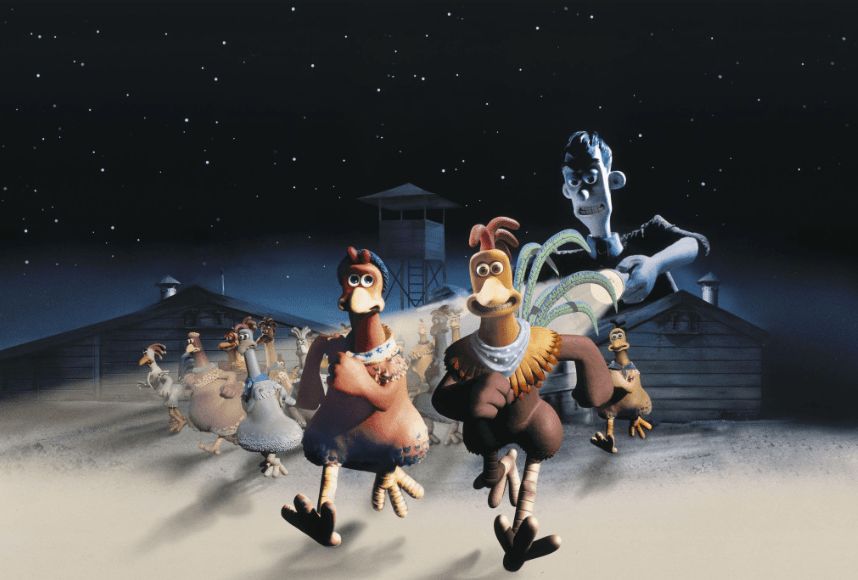
Act I: Immortal Clay
The year 2000 presented audiences with a mediocre and rather uninteresting selection of animated movies. Five years prior, Pixar had released their groundbreaking behemoth Toy Story, whose sequel (which was met with acclaim from both critics and audiences) obliterated the (animated) box office competition of 1999. With no scheduled release from Pixar the following year, the playing field was favourable to challengers. Studios had begun dipping their toes in Pixar’s digital pond, experimenting with the methods Pixar have come to perfect. The primary animation technique was still two-dimensional. Interestingly, the feature that succeeded Toy Story 2 was neither digitally animated, nor was it hand-drawn; it was animated with clay by Aardman Animations, and its name was Chicken Run.
The animation studio had previously released the Oscar-winning short The Wrong Trousers (1993), starring the iconic duo Wallace and Gromit. Chicken Run was their first full-length theatrical release, but with no ties to Wallace and Gromit, save for its style. This distinct style combined with an unconventional form sowed seeds which would sprout into success.
Claymation, to which this form is commonly referred, is a technique which possesses a unique benefit other animation styles often lack. If made correctly, the passage of time is not impairing. Instead, claymated films age like a bottle of red wine, developing nuance and character with every year. The technique requires immaculate focus and rigorous attention to detail. Characters, costumes, sets and props are all constructed from scratch, and each frame is carefully crafted and captured to piece together a cohesive whole; it is a wonder clay-animated films even exist. Love and care are as essential as time, effort and determination. Claymation will never yield the flawlessly animated scenes digital techniques achieve today, but these rough edges are what distinguish the craft. Therefore, Chicken Run may be likened to a delicate bowl of homemade tortellini “in brodo”. Each piece (scene in our context) is handmade and unique, surpassing the quality of store-bought cans. When made with love and care, beauty exists apart from appearance, and the rough edges only give character.
Its 3D-animated contemporaries, such as Disney’s Dinosaur and Universal Studio’s Casper’s Haunted Christmas have not reached immortality. Contrarily, their animation has festered and developed a rancid, unappetising smell. The fundamental flaw of early computer-generated 3D animation was that upon release, it was marked with a best-before date. There are exceptions – Toy Story and its sequel Toy Story 2 are terrific achievements in storytelling, thus obscuring the sub-par animation – to this rule, but since the technology existed in its early infancy, these exceptions are scattered in a haystack of mould. Chicken Run, on the other wing (hand), has not suffered the same fate and maintains its beauty; novel watchers may admire the work without being affected by a time-based bias. Aardman’s excellent claymation is a rigid-smooth amalgamation, hand-crafted with authentic perfectionism.
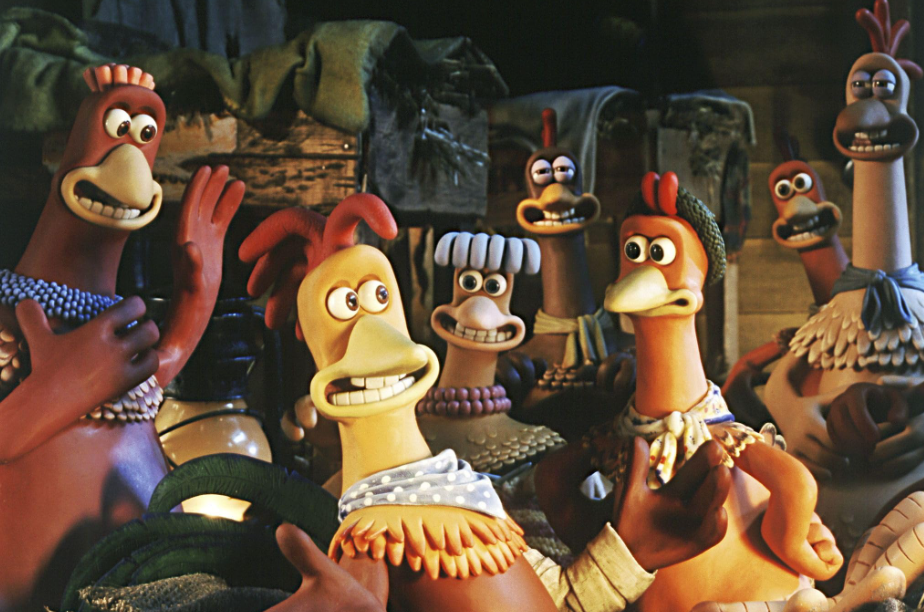
Aardman’s distinct style breathes life into the chickens by allowing them to express real human emotions. Chickens, who are otherwise usually perceived as creatures devoid of intellect, consequently become more human than their human counterparts. However, this mentality of understanding chickens as mindless and cognitively inferior is also what is behind the inhumane industry Chicken Run implicitly critiques: the egg industry.
Act II: Disposable Souls
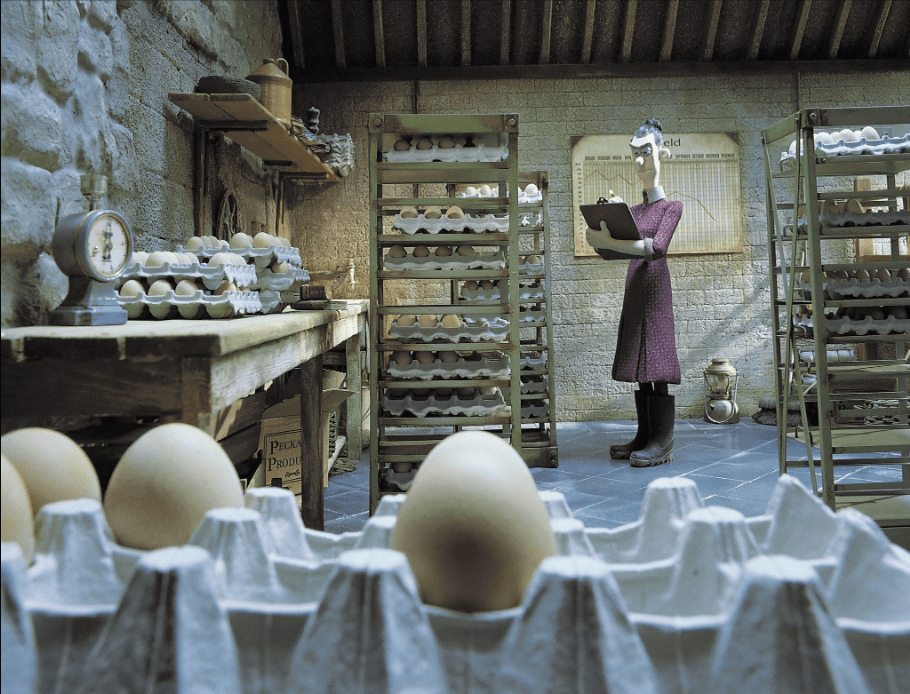
Ten minutes into the movie, a menacing alarm horn alerts the chickens to line up for egg inspection. Merciless Miss Tweedy, the baleful proprietor of the chicken farm, approaches like a towering beast above quivering hens. One poor soul named Edwina has failed to produce any eggs and is brought to Tweedy’s shed where we find an axe and a log. The swing is swift, the cut is clean, and so, the bird is dead. Ginger, our intrepid and bright-spirited antagonist, watched this atrocity occur. From this point forward, the stakes were real, and the hens’ struggle was one of life and death. It was a shocking scene that left me breathless, serving as a perfect inciting incident to force our characters into action.
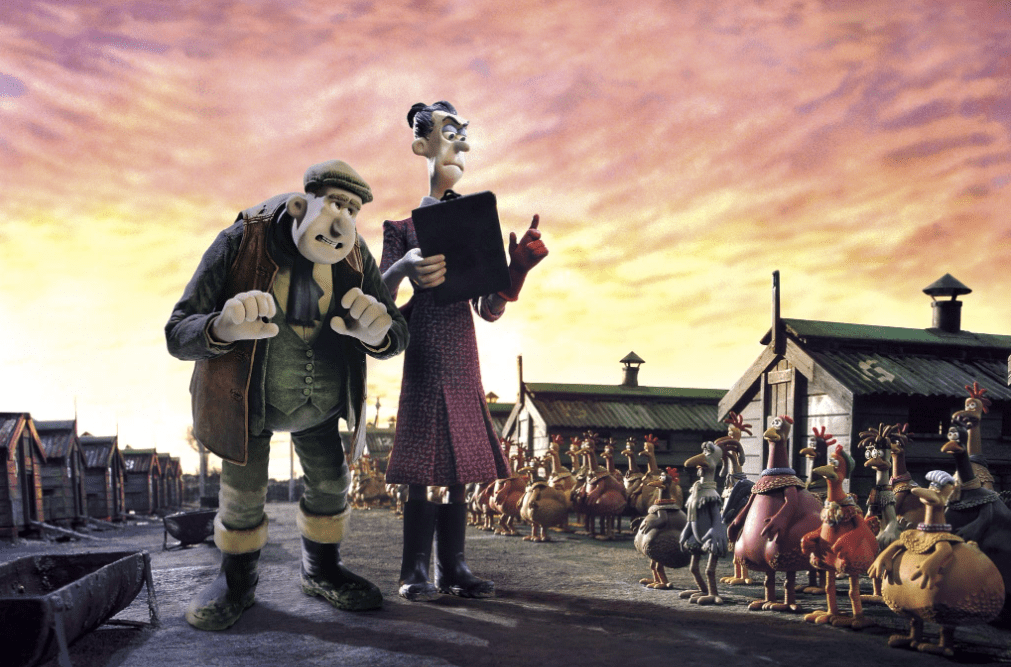
In the film, the chickens are deliberately portrayed as prisoners, and the high barbed fences, the old rusted corrugated iron coops, and the melancholic grey colour palette unavoidably remind you of prison camps. To any human, these conditions are far from humane; the chickens exist for one purpose, but once they are eggless, off with their heads. This farm would, however, be regarded as rather hospitable, as our reality presents a far worse alternative for our egg-laying friends.
A wild hen, such as the red junglefowl, produces around a dozen eggs annually. The industrially raised chickens, however, have the capacity, through decades of breeding, to lay 300 eggs in the same period. In Brazil, these limits have been pushed, and chickens with the capacity of laying 500 eggs a year now breathe (van de Braak, 2019). This reality is not surprising, as the UK alone produced 10.4 billion eggs in 2022. Sourcing this enormous number from red junglefowl, which, from an ethical perspective would be preferable, is a logistical impossibility. Instead, we have the charming egg industry, wholesome, hygienic and humane.
Eggs may be divided into three categories: caged, free-range and organic. Schemes to oversee production are in effect – The Lion Code of Practice for caged hens; RSCPA assured for free-range hens; the Soil Association Certificate for organic hens. Regardless of category, the lives and fates of egg-laying chicks are engulfed in horrors, miseries and suffering. It all begins with, you guessed it, eggs.
After twenty-one days in artificial incubation, the eggs hatch and out leaps a tiny chick. Laying hens must be female, so death is ahead of the male, sickly or deformed. Why? It is not economically viable to keep them alive. According to the Humane Slaughter Association, it is, however, instrumental that day-old chicks are treated and slaughtered humanely.
In the UK, operators who are involved in the killing of chicks have a legal obligation to ensure they do not cause any ‘avoidable pain, distress or suffering’ under the Welfare of Animals at the Time of Killing Regulations 2015 (WATOK).
Gas killing is standard practice. The idea is simple. Let the chicks inhale a gas mixture with little to no oxygen content to induce death by suffocation. Interestingly, neonates are resilient to oxygen deprivation, and this method does not result in an immediate loss of consciousness. “It is therefore necessary to expose chicks to the gas mixtures for at least three minutes to ensure they are killed, and not just rendered unconscious (stunned).” In any other context, this mass killing of innocent infants would be an act of devilish wickedness. In the egg industry, however, these one-day-old infants have been reduced to numbers and statistics. And that folks is how you label oxygen deprivation humane; killing is a necessary means to protect our interests (or more accurately, our egg cravings). But what else is expected of an industry worth over £1 billion a year?
Following the death of infants, those lucky to have escaped instantaneous annihilation have just boarded the train of misery. These pretty individuals spend their next one to two years as egg-laying machines, producing an annual worth of 300 to 500 eggs, each. After the laying efficiency eventually declines, the hard-working hens are labelled as “spent”. As we have learned, when chickens are useless, their lives matter little to their lords. If they are lucky, their flesh is sold as low-quality meat. More commonly, however, the hens are buried, composted or incinerated, or rendered into animal feed (turning chickens into involuntary cannibals). Edwina the hen, who loses her head to Mrs Tweedy’s axe because she is “spent”, is transformed into a lavish meal by her proprietors. In large-scale chicken production, however, this preparation is uncommon simply because it is not economically sustainable (Fan, H., Wu, J., 2022) There is not even honour in death, and you might instead become a meal to the posterity.
Approximately 65 per cent of eggs are currently qualified as free-range, and the percentage of caged hens is decreasing annually. Customers have buck-buck-bawked with their wallets and forced the hen lords to adapt; the majority of hens do “enjoy unlimited daytime access to outdoor pastures.” Regardless of certification, however, existence as an egg hen is grim. Free-range hens are theoretically entitled to unlimited access to the outside world, but only through ‘popholes’ on the sides of the barn. The legal limit is six chickens per square metre, and with the industry’s gargantuan production, it is easy to presume that these limits are pushed. Although hens are labelled as free-range, their existence is still likely to be cramped and stressful, and pecking outside becomes an impracticality.
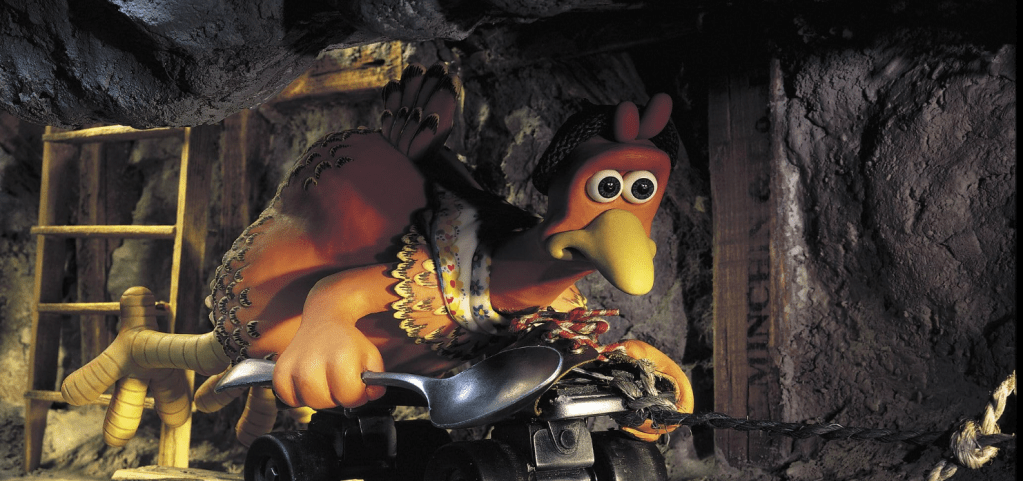
Mrs Tweedy’s hens live in threadbare sheds but are allowed to roam and peck beneath the sky freely and abundantly. Their conditions are depicted as poor, but if compared to the real world, they would be lucky. Our egg-laying hens would watch Chicken Run and marvel at the utopian ideal which, to them and us, is only a fantasy. When legislation said to protect dogs, cats, hamsters or any other domesticated animal with no material purpose is reviewed, the treatment of our beloved egg producers gets increasingly more interesting. The Animal Welfare Act prohibits owners from mutilating, poisoning or causing unnecessary harm to animals, but chickens (and other farm animals) are excluded because they are regarded as resources and products. Not only does this expose the hypocrisy in human morality, but it also returns us to our antagonist, Mrs Tweedy.
Act III: Human Superiority
Mrs Tweedy’s perception of her chickens is accurately reflected in the Animal Welfare Act. She is a money-hungry oppressor who cares little for their welfare, and is, as a result, an abusive antagonist deserving of none of our sympathies. It is, contrarily, easy to sympathise with Ginger, Rocky and the rest of the chicken crew, as they resemble humans in every aspect except appearance. The chickens are humanised and Mrs Tweedy dehumanised. This is accredited to Aardman’s distinct style and their portrayal of the chickens, which still deserves praise and admiration. Although this depiction might aid in raising awareness of chicken oppression – which we by now can recognise as a reality – it does conform to the destructive principle of human superiority.
Throughout history, philosophers have argued that it is the intellect which distinguishes humans from animals. Aristotle divided the soul into three degrees – the nutritive, the sensitive, and the rational – all encapsulated in the human soul. Descartes’s humans are cognisant soul-possessing thinkers, while animals are intricate machines incapable of thought – mindless marionettes of the material world. With the advent of the Enlightenment and the rise of humanism, the belief in humankind existing separately from the natural world was strengthened. These ideas also appear in the religious realm, as the three Abrahamic religions position humankind atop all other living creatures. Our essence is humanity, and it is by this that we are defined. But when we are forced to reckon with this humanity, we are left scrambling for meaning. The animal kingdom and the natural world live in an equilibrium, as their denizens instinctively know their purposes without contemplating their significance. It creates an interesting juxtaposition: those we traditionally regard as uncivilised, brutal and cruel, have embraced tranquillity simply through existing. The human intellect, which we proudly hold as our distinguishing trait and greatest asset, is the source of our existential anguish and a force propelling us into committing unnatural atrocities. Never has any cuck-a-doodle-doo-ing creature reduced cities to ashes with weapons of mass destruction. We, on the other hand, invented the nuclear bomb to do that very thing.
Still, when the detonations of Oppenheimer’s children are lamented, it is the loss of human life we emphasise. Similarly, when Ginger and her comrades are forced to escape death and suffering, our sympathy and support are rooted in recognising that these conscious characters are like us; their fictitious humanity is as real as our own. This raises another question: should sympathy only be granted to beings with human-like characteristics? Real-life chickens may not possess similar cognitive abilities as their on-screen counterparts, but they are still sentient individuals, cognitively, socially and emotionally complex (Marino, L., 2017). They might not be capable of creating an intricate flying contraption, but is it ultimately reasonable to allow an organism’s level of intelligence to determine its right to live?
Quite fittingly, Aardman does not end the credits by jokingly displaying that “no chickens were harmed during this production.” Its omission may ultimately be a sign of awareness from the animation studio; unless the crew was entirely comprised of plant-only eaters, chickens were definitely indirectly harmed through this production. Well, Ginger and her fellow hens did eventually escape death and reach paradise. A paradise which, to their non-animated counterparts, is merely fantasy on a big screen.
List of references and further reading
an de Braak, T. Reaching 500 eggs in Brazil. Hendrix Genetics. (2021)
Fan, H., Wu, J. Conventional use and sustainable valorization of spent egg-laying hens as functional foods and biomaterials: A review. Bioresour. Bioprocess. 9, 43 (2022).

